What to Do After a Tree Falls on Your Roof
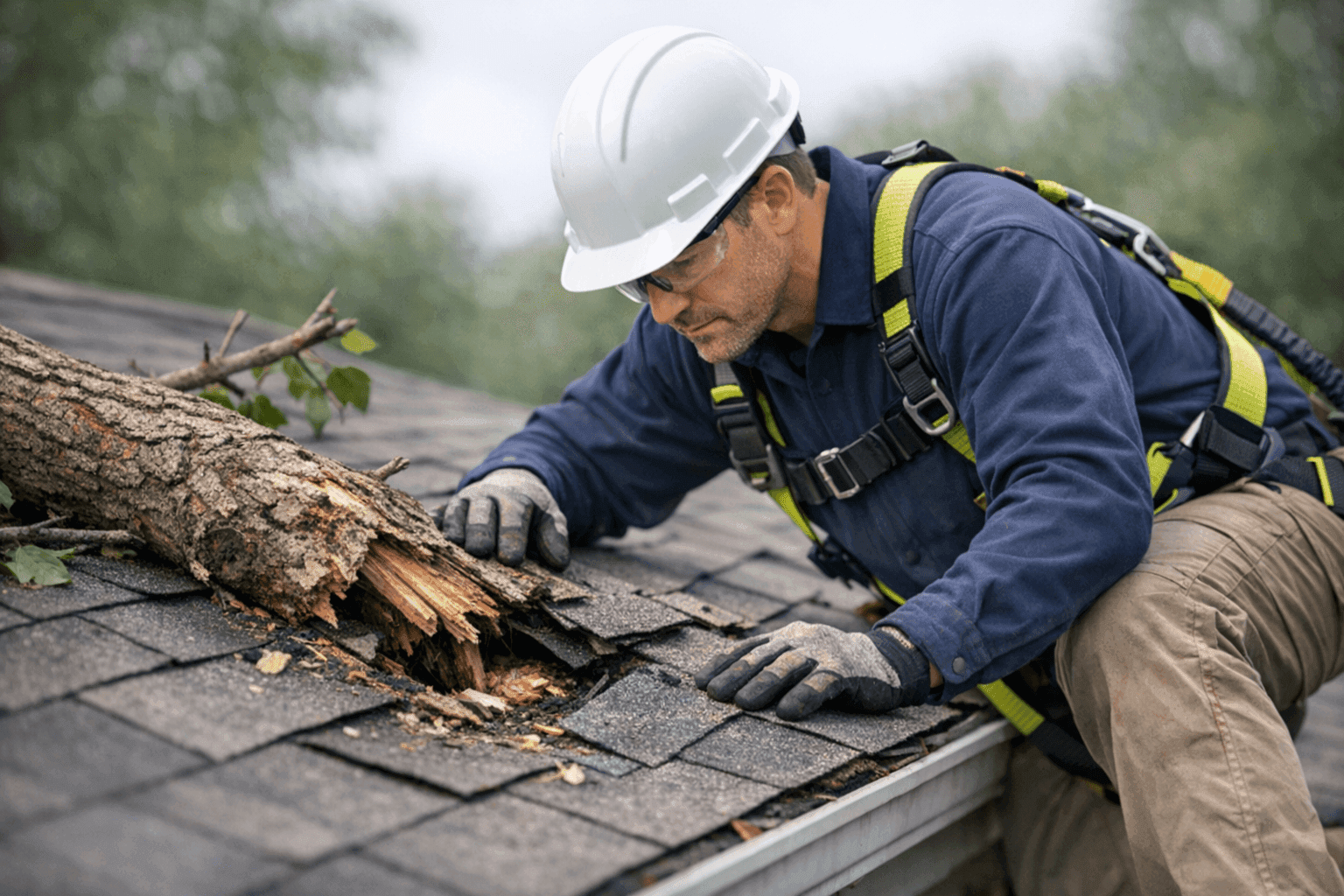
A tree crashing onto your roof feels like a scene straight out of a disaster movie. Your heart races. The roof over your head—the very thing that keeps your family safe—has just been tested by nature itself.
At Overhead Roofing, we've seen the aftermath up close. We know how urgent every minute feels, and we understand the safety risks involved. Let’s walk through the steps you should take, calmly and safely, if you ever find yourself in this stressful situation.
Immediate Safety Steps
First things first: your safety and your family’s safety come before anything else. If a tree falls on your roof, it’s not just a roofing problem—it’s a household emergency.
- Evacuate areas directly under the fallen tree—even if damage looks minor.
- If you smell gas, hear hissing, or see sparking wires, leave the house immediately.
- Call 911 if there’s any chance of injury, fire, or structural collapse. Don’t try to be a hero—let professionals handle dangerous situations.
- Stay away from the affected area until emergency services or a qualified roofing contractor has checked it out.
According to the International Code Council and the National Roofing Contractors Association, never re-enter a home with possible structural damage until it’s cleared by pros.
Assessing Damage Safely 🕵️
Once everyone is safe and you’ve called for help if needed, you might be tempted to see the damage up close. Resist the urge to climb onto the roof or move debris yourself.
Here’s what you can do safely:
- Walk the perimeter of your home from the ground.
- Use binoculars if you have them to get a closer look from a safe distance.
- Snap photos or videos for insurance purposes—but only from safe vantage points.
Look for visible signs of trouble:
- Broken rafters or sagging areas
- Exposed insulation or daylight coming in
- Water leaks or drips inside the house
Emergency Repairs and Next Steps
If you’ve confirmed everyone is safe and called your insurance company, it’s time for the pros. Overhead Roofing offers emergency-services designed for exactly these moments.
What happens next?
- Our team will arrive with protective equipment and assess the structure for risks.
- We may install emergency tarps or temporary supports to prevent further water damage.
- Any debris removal or roof repair involving heavy equipment or power lines is handled only by licensed professionals.
Remember: DIY patches or makeshift repairs can put you at risk. Let the experts take care of both roof repair and structural repair.
Quick Safety Checklist
- Everyone out of immediate danger?
- Gas, water, and electricity checked?
- Emergency services called if needed?
- Insurance company notified with photos and details?
- Only professionals allowed near damage?
DIY vs. Call a Pro
It’s tempting to grab a ladder and “just take a look,” but even small mistakes can have big consequences. A tree on your roof is like a bull in a china shop—the wrong move can make hidden damage worse.
Always call a pro for:
- Tree removal
- Large debris
- Sagging ceilings
- Electrical hazards
- Roof holes or punctures
What Pros Do On Arrival
When a roofing specialist shows up, it’s not just about fixing what’s broken. We:
- Check for hidden water intrusion
- Inspect the attic, insulation, and structural supports
- Assess the condition of roof materials—whether it’s shingle, metal, or tile roofing near you
If needed, we coordinate with tree removal experts and other trades to keep your family safe and your home secure.
When It’s Truly an Emergency 🚨
Not every fallen branch is a crisis. But these signs mean it’s time to act fast:
- Roof collapse or major sagging
- Water pouring through the ceiling
- Exposed power lines
- Unstable tree still leaning on the house
In these cases, call for emergency-services immediately.
Preventing Future Tree Damage
You can’t control the weather, but you can control preparation.
- Trim branches that overhang your roof, especially old or dead limbs.
- Schedule regular inspections to spot weak spots before storms arrive.
- Choose impact-resistant roofing materials like metal roofing or upgraded shingle systems.
The Insurance Institute for Business & Home Safety recommends annual tree and roofing inspections, especially before storm season.
Common Mistakes to Avoid
- Delaying repairs “until it stops raining”—water intrusion can cause hidden rot fast.
- Climbing onto a damaged roof—one bad step can lead to serious injury.
- Ignoring small leaks—every drip is a sign of bigger trouble.
Signs of Roof Trouble After a Tree Fall
Even if the damage looks minor, watch for:
- New water stains on ceilings or walls
- Drafts or cold spots indicating lost insulation
- Odd creaking or shifting noises
- Gutter or downspout damage
If you notice these signs, contact a roofing contractor for a full inspection.
Timeline & Disruption: What to Expect
Emergency repairs can often be started within hours—stabilizing your home is our top priority. Full repairs or roof replacement may take days or weeks, depending on:
- Extent of damage
- Weather conditions
- Material availability
You’ll likely need to coordinate with your insurance adjuster and may need temporary lodging if the structure is unsafe.
Materials and Equipment Used
For emergency coverings, pros use heavy-duty tarps, plywood, and industrial fasteners—not household plastic sheets.
Repairs may involve:
- New decking or structural supports
- Shingle, tile, or metal roofing materials
- Flashing, sealants, and ventilation upgrades
All work meets local building codes and safety standards, as outlined by the National Roofing Contractors Association.
Seasonal Considerations
Heavy snow, spring winds, and summer storms each bring unique risks. Winter tree falls can cause ice dams and hidden leaks, while summer storms may cause immediate water damage.
Schedule preventative maintenance before storm seasons to keep your roof strong all year.
Frequently Asked Questions
Will my insurance cover the damage?
Most policies cover tree impact if caused by wind or storm. Check your policy and document everything.
How soon should I call for help?
Immediately. Fast action prevents further damage and speeds up your insurance claim.
Can you fix the roof if it’s still raining?
Yes—emergency tarps and temporary repairs can limit water intrusion until full repairs are possible.
The Value of Professional Roofing Services
A tree on your roof is more than a mess—it’s a test of your home’s strength and your family’s safety. By acting quickly, prioritizing safety, and calling experienced pros, you protect what matters most.
For everything from emergency tarping to complete roof replacement, Overhead Roofing is here to help. Our team handles emergency-services, roof repair, and structural repair for homes of all shapes and sizes.
Call Overhead Roofing now — or reach us anytime at 855-554-4704 .