How to Safely Remove Moss and Algae From Your Roof
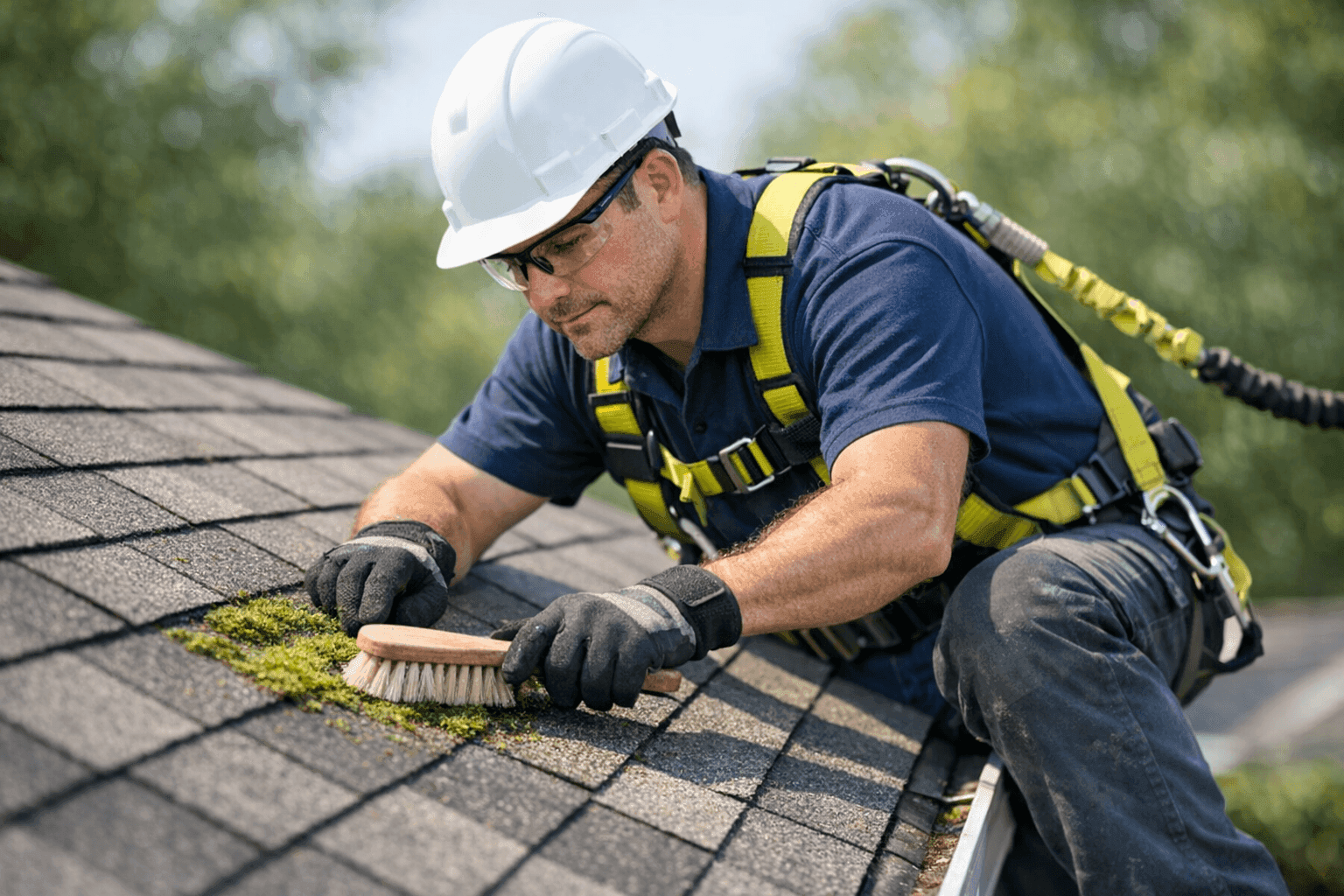
Keeping your roof clean isn’t just about appearances. Moss and algae might seem harmless, like a green sweater on your shingles—but left unchecked, they can sneak in and wreak havoc.
At Overhead Roofing, we know how quickly a small patch of green can grow into a real headache. That’s why it’s important to act fast, stay safe, and know exactly when it’s time to step aside and call in the pros.
Why Moss and Algae Are a Problem
Moss and algae love to settle where moisture lingers. Shady, north-facing roofs? Prime real estate. But what’s the big deal?
- Moss acts like a sponge, holding water against your roof. Over time, this constant dampness loosens shingles, causes wood rot, and invites leaks.
- Algae—those black or green streaks—look ugly and can speed up shingle wear, especially on asphalt and tile.
- Both can reduce your roof’s lifespan, jack up your energy bills, and even void some roofing warranties.
Think of them as uninvited guests at a backyard barbecue. They stick around, make things uncomfortable, and leave a mess behind.
Quick Safety Checklist Before You Start 🦺
Before you head up to your roof, take a deep breath. Safety first.
- Check the weather. Never work on a wet or icy roof.
- Wear rubber-soled shoes for grip.
- Use a sturdy ladder—secure it on level ground.
- Gloves, goggles, and a dust mask protect your skin and lungs.
- Never work alone. Have someone nearby in case you slip.
According to the Occupational Safety and Health Administration (OSHA), falls from roofs are a leading cause of home injuries. Don’t cut corners. If anything feels unsafe, stop.
Safe Removal Methods
Let’s talk about clearing the green stuff without damaging your roof—or yourself.
Soft Brushing
Gently brush moss off shingles with a soft-bristled broom, moving downward to avoid lifting or cracking them. Never use a pressure washer—it’s like using a fire hose on a birthday cake. The blast can strip away granules and ruin your roof.
Eco-Friendly Cleaners
Mix a 50/50 solution of water and mild bleach or white vinegar. Spray it on affected areas, let it sit for 15–20 minutes, then rinse gently with a garden hose. Use a pump sprayer for even coverage. Always protect landscaping below—cover plants or rinse them before and after.
Commercial Moss & Algae Treatments
Look for products approved by the Asphalt Roofing Manufacturers Association (ARMA) or the National Roofing Contractors Association (NRCA). These are designed to be tough on moss, gentle on your shingles.
Never use harsh chemicals or metal tools. They can corrode flashing and damage roof surfaces.
When DIY Is Unsafe or Ineffective
Some jobs are bigger than a Saturday afternoon project.
- If your roof is steep, high, or slippery, don’t risk it.
- Large patches of moss or algae, especially if they’ve been growing for years, may signal deeper trouble.
- If you spot loose shingles, soft spots, or signs of leaks—call in a roofing company.
Roofing isn’t just about muscle; it’s about knowing where you can safely step. Sometimes, the safest move is to let a professional handle it.
What Pros Do On Arrival
When you call Overhead Roofing for preventative maintenance or roof repair, here’s what to expect:
- Thorough Inspection: We check for hidden damage beneath the moss and algae.
- Safe Removal: Using harnesses, roof anchors, and approved treatments, we clear away growth without harming your shingles.
- Repairs and Recommendations: If we find cracked tiles, missing shingles, or damaged flashing, we’ll let you know and offer solutions.
Our team follows all International Residential Code (IRC) and OSHA safety standards.
Common Mistakes to Avoid 🚫
- Using a pressure washer: It strips protective layers and drives water under shingles.
- Scraping with metal tools: Scratches and gouges turn into leaks.
- Ignoring proper safety: One slip can mean a trip to the ER.
- Letting debris pile up: Leaves and branches trap moisture and feed moss growth.
Signs of Trouble: When Moss and Algae Signal Bigger Issues
If you see any of these, your roof may need more than just a cleaning:
- Loose, curling, or missing shingles
- Damp spots on ceilings or attic
- Rusted or lifted flashing near chimneys or vents
- Sagging rooflines
These are clues you might have leaks or structural problems. In these cases, shingle roofing and deeper repairs could be necessary.
Timeline & Disruption: What to Expect
DIY moss removal usually takes a few hours for a small section, but stubborn growth or a large roof can mean a full weekend. Professional services can often finish the job faster and more safely, minimizing the time your home is disrupted.
Materials and Equipment Checklist
- Soft-bristled broom or brush
- Garden hose (not a pressure washer)
- Pump sprayer
- Mild bleach or vinegar solution
- Gloves, goggles, and dust mask
- Ladder with stabilizer
- Tarp to cover landscaping
Preventing Regrowth 🌱
Once your roof is clean, it’s time to keep it that way.
- Trim overhanging branches to let sunlight dry out your roof.
- Clean gutters regularly so water flows off, not under, your shingles.
- Install zinc or copper strips near the roof ridge. Rainwater carries metal ions down the roof—they act like a natural moss repellent.
- Schedule regular inspections—at least once a year or after major storms.
Staying ahead of moss and algae is like keeping weeds out of your garden. A little effort up front saves a world of trouble later.
Seasonal Considerations
Spring and fall are the best times for roof cleaning. Temperatures are mild, and you can spot problems before summer heat or winter storms hit.
Avoid cleaning in the heat of summer (chemicals can evaporate too fast) and in freezing winter conditions (ice makes everything riskier).
Costs & When It’s an Emergency
DIY cleaning is low-cost but comes with risks. Professional moss removal costs vary based on roof size, pitch, and how much work is needed.
If you notice interior leaks, sagging, or rapid moss growth after a storm, it’s time to treat the situation as urgent. Fast action prevents bigger headaches—like mold or structural rot.
Frequently Asked Questions
Does moss always mean my roof is damaged?
Not always, but it’s a warning sign. Early action stops problems before they start.
Can I use household bleach?
Yes, but dilute it and protect your landscaping. Commercial cleaners are often safer for your roof.
How often should I check for moss and algae?
Inspect your roof twice a year, or after heavy storms.
What about flat roofs or tile roofs?
Flat and tile roofs near you can be more prone to moss, since water drains slower. The same cleaning principles apply, but tiles are more fragile—don’t walk on them if you can avoid it.
The Value of Professional Roofing Services
A healthy roof protects everything beneath it. Overhead Roofing specializes in keeping your home safe with regular maintenance, roof repair options, and expert cleaning.
If you ever feel uncertain about tackling moss or algae yourself, don’t hesitate to reach out. Your safety—and your roof’s health—come first.
Call Overhead Roofing now — or reach us anytime at 855-554-4704 .