How to Prevent Roof Damage From Heavy Snow and Ice
Winter can be beautiful. But when heavy snow and biting ice settle on your roof, the story changes. Suddenly, that winter wonderland overhead becomes a real cause for concern. If you’re like most homeowners, you want peace of mind—knowing your home and family are protected.
At Overhead Roofing, we know the toll a harsh winter can take on residential roofs. Let's walk through the risks, the signs, and the steps you can take to keep your roof safe, dry, and strong all winter long.
Risks of Snow and Ice on Roofs ❄️
Snow looks light and fluffy. But when it piles up, it gets heavy—fast. In fact, a single cubic foot of wet snow can weigh up to 20 pounds, according to the Federal Emergency Management Agency (FEMA). That’s like parking a small car on your rooftop.
The dangers include:
- Excessive weight: Can cause sagging, cracked rafters, or even collapse.
- Ice dams: When warm air inside melts snow, water runs down and refreezes at the eaves, creating a dam that traps more water.
- Water leaks: Trapped water seeps under shingles or tiles, leading to rot, mold, and ruined insulation.
- Gutter and downspout damage: Ice buildup can tear gutters away, causing water to spill where it shouldn’t.
Ignoring these risks is like ignoring a slow leak in a boat—not a problem until suddenly, it’s a big one.
Safe Snow Removal Tips
Before you grab a ladder or shovel, remember: safety first.
- Stay on the ground. Use a roof rake with a long, telescoping handle. Never climb onto an icy roof.
- Clear the first few feet. Remove snow from the edge to help prevent ice dams, but don’t scrape down to bare shingles—leave a thin layer to protect your roofing material.
- Work in small sections. Heavy, wet snow is tough on your back and your roof.
- Mind power lines. Always look up and stay clear of any overhead wires.
If you’re ever unsure, step back. It’s always safer to call professionals like Overhead Roofing for help with preventative maintenance.
Signs of Damage to Watch For 👀
Winter roof damage can be sneaky. It often starts small—then grows fast.
- New leaks: Stains on ceilings or walls, or drips after snow melts.
- Sagging: A dip in your roofline signals trouble underneath.
- Cracked or missing shingles/tiles: Especially after a storm.
- Peeling paint or bubbling plaster: Moisture trapped inside.
- Ice hanging from eaves or gutters: A classic sign of ice dams.
Notice any of these? It’s time to act. Our roof repair team can inspect and fix the problem before it worsens.
Preventing Ice and Snow Buildup
Think of your roof as a shield. The stronger and better maintained it is, the more it can withstand.
Actionable prevention tips:
- Insulate your attic. This keeps warm air inside your home, not leaking up to melt snow on your roof.
- Ventilate properly. Good airflow in the attic keeps temperatures even, preventing snow melt and ice dams.
- Seal air leaks. Check around attic hatches, vents, chimneys, and light fixtures. Even small leaks make a big difference.
- Clean gutters and downspouts. Clear out leaves and debris in fall—clogged gutters are a recipe for ice dams.
- Schedule regular roof inspections. Early detection is the best defense. Professionals can spot trouble before you ever see a drip.
The Insurance Institute for Business & Home Safety (IBHS) recommends annual roof checks—especially before and after winter.
The Quick Winter Roof Safety Checklist
- Attic well insulated and ventilated?
- Gutters clear and firmly attached?
- No overhanging branches or debris?
- Attic free of dampness or frost?
- Ice melt products (calcium chloride, not rock salt) on hand?
If you’re checking “no” to any, get them fixed before the next storm rolls in.
DIY vs. Call a Pro
There’s pride in taking care of your home. But icy roofs and ladders can turn a quick fix into a trip to the ER. Here’s when to call Overhead Roofing:
- Heavy snow or thick ice layers
- Visible sagging or cracking
- Leaks you can’t trace
- Any roof older than 15 years
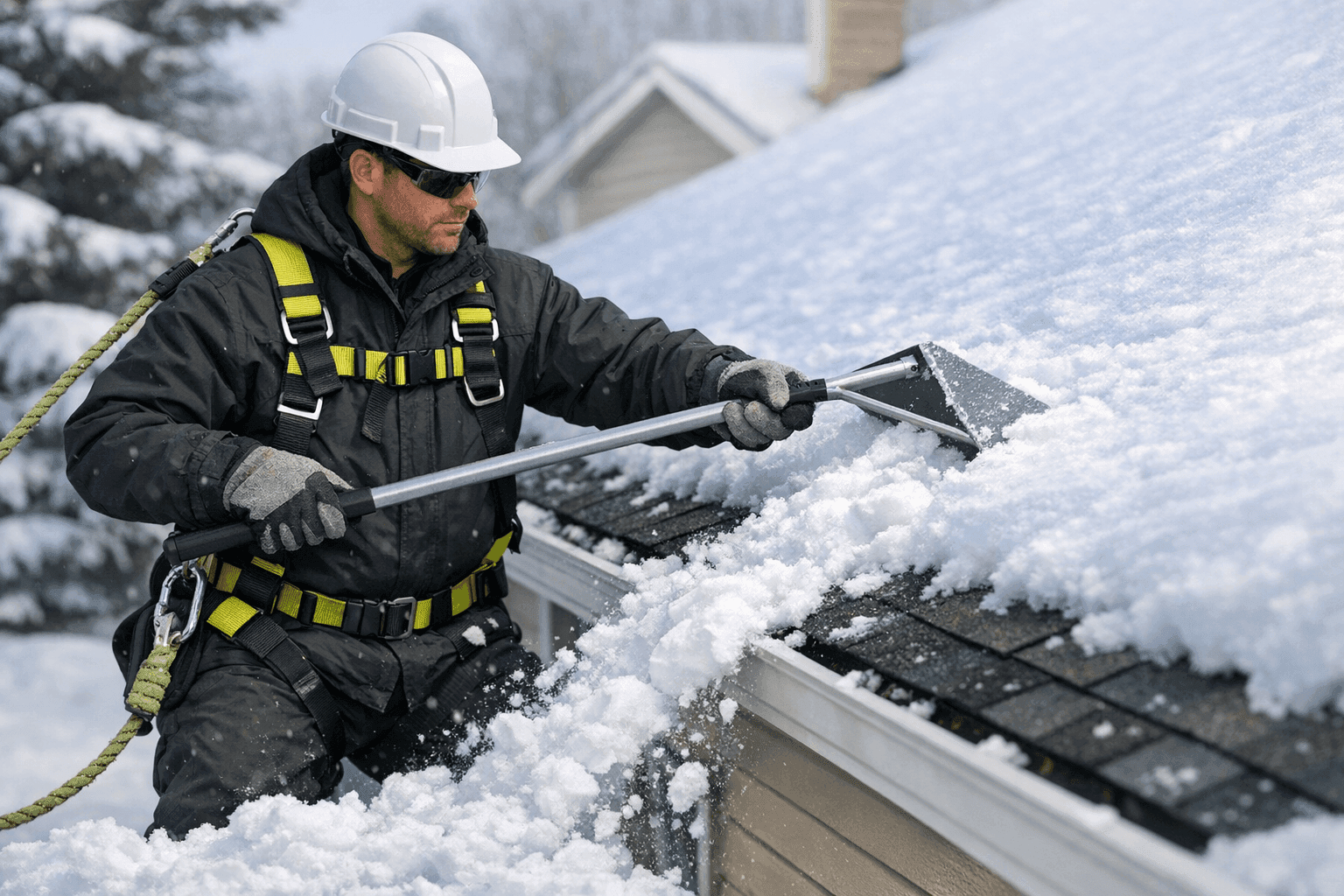
Our team uses safety harnesses, roof-friendly tools, and follows OSHA guidelines to keep everyone safe.
What Pros Do On Arrival
When you call for help, here’s what you can expect:
- Thorough inspection: We check the attic, roof surface, and all flashings.
- Safe snow & ice removal: Using specialized rakes and de-icing agents.
- Check gutters and downspouts: Ensuring they’re flowing freely.
- Seal and repair: Fixing any minor issues before they become major.
We also offer advice tailored to your home’s specific roof type—whether you have shingle, metal, or Preventative Maintenance.
Cost and Time Factors
Snow and ice removal costs vary. Factors include:
- Roof size and pitch
- Amount of snow/ice
- Accessibility
- Required repairs
Preventative work, like regular inspections, is almost always less expensive than emergency repairs after major damage.
When It’s an Emergency
If you see water pouring inside, hear loud pops or cracks, or spot severe sagging—leave the home and call emergency services. Then, reach out to Overhead Roofing. Your safety comes first.
Seasonal Considerations for Roof Care
- Fall: Clean gutters, trim branches, check flashing.
- Winter: Monitor snow buildup, watch for leaks or icicles.
- Spring: Inspect for winter damage, schedule repairs.
- Summer: Plan upgrades or replacements when weather’s mild.
Staying ahead of the seasons means fewer surprises.
Common Mistakes Homeowners Make
- Using salt (it damages shingles and plants)
- Waiting until spring to fix leaks
- Ignoring attic ventilation
- Overloading the roof with snow removal tools
A little prevention goes a long way—like keeping your car tuned up before a road trip.
Timeline and Disruption to Expect
Most snow removal jobs take a few hours. Minor repairs can be completed same-day. More extensive work—like structural fixes—may take longer, especially if weather delays access.
We always aim to minimize disruption, keeping your family’s routine in mind.
Materials and Equipment Pros Use
- Fiberglass or aluminum roof rakes (won’t damage shingles)
- Calcium chloride ice melt (never rock salt)
- Heavy-duty extension ladders with stabilizers
- Safety harnesses and roof anchors
- Infrared tools to spot hidden moisture
Using the right gear is as important as the work itself.
Frequently Asked Questions
How much snow is too much for my roof?
Most roofs can handle about 20 pounds per square foot—but design, age, and materials matter. When in doubt, schedule an inspection.
Are ice dams covered by insurance?
Often, yes—but only if you maintain your roof. Insurance adjusters check for neglect, so regular maintenance pays off.
Can I install heating cables myself?
They work, but should be installed by a professional to avoid fire risk and ensure effectiveness.
Do all roof types need the same care?
Tile, shingle, metal, and flat roofs each have unique needs. Our team at Overhead Roofing can recommend the best plan for your home.
Don’t Wait—Winter Roof Damage Gets Worse
Snow and ice won’t wait for spring, and neither should you. Regular maintenance, quick action on warning signs, and safe snow removal protect your home—and your wallet. If you’re searching for a reliable roofing company to keep your roof in top shape, Overhead Roofing is here to help.
Call Overhead Roofing now — or reach us anytime at 855-554-4704 .