New Roof Installation: What to Expect From Start to Finish
Is your roof showing its age, or maybe you’ve spotted a leak that just won’t go away? Replacing your roof is a big step, but it’s also a fresh start for your home. At Overhead Roofing, we understand the headaches and stress that come with such a major project. We’re here to walk you through what happens, from the first handshake to the final cleanup.
A new roof isn’t just about shingles or tiles—it’s about peace of mind, better protection, and even raising your home’s value. Here’s how we make sure you know what’s coming, every step of the way.
Why Install a New Roof? 🏠
Think of your roof as your home’s helmet. It shields everything beneath it from wind, rain, hail, and the blazing sun. But even helmets wear out. Here’s why homeowners like you consider a new roof:
- End of lifespan: Most roofs last 15–30 years (depending on materials). Shingles curl and tiles crack. When repairs just patch the pain, it’s time to start fresh.
- Persistent leaks: Dripping water can turn a cozy attic into a breeding ground for mold. Water stains, warped drywall, and musty odors are red flags.
- Storm or hail damage: Wind, hail, and falling branches can cause sudden, severe problems. Sometimes, it’s safer and more cost-effective to replace than to fix.
- Boosting value and curb appeal: A new roof can add thousands to your home’s value, especially if you’re considering selling.
- Energy efficiency: Modern roofing materials improve insulation, which can lower energy bills and keep your home comfortable year-round.
A new roof isn’t just a fix—it’s an investment in your home’s future.
Step-by-Step Installation Process
Every home is different, but our installation process follows a clear path. Here’s what you can expect:
1. Thorough Inspection
We begin with a detailed inspection. Our team checks the roof’s structure, decking, flashing, and ventilation. Sometimes, hidden issues like rotted wood or poor insulation pop up. If so, we’ll talk through your options before any work starts. (For more, see our Inspections service.)
2. Choosing Materials
Not all roofs are created equal. Do you need classic shingle roofing, durable metal roofing, or perhaps tile roofing near you for that Mediterranean look? We’ll show samples, explain pros and cons, and help you find what fits your budget and style.
3. Protecting Your Property
Before we lift a single shingle, we protect gardens, decks, and siding. Drop cloths, tarps, and plywood shields make sure your home looks just as good after the job as it did before.
4. Tear-Off: Out With the Old
Removing the old roof is noisy, dusty work. Shingles, nails, flashing, and underlayment all come off. We use magnetic rollers to catch stray nails—less for you to worry about.
5. Decking & Repairs
With everything stripped away, we inspect the decking. If we find rot or water damage, we replace those sections. Think of this step as giving your roof a strong backbone.
6. Waterproofing & Underlayment
Next comes the underlayment—a water-resistant layer that acts like a raincoat for your home. Ice and water shield is added to valleys, eaves, and other vulnerable spots.
7. Installing New Roofing
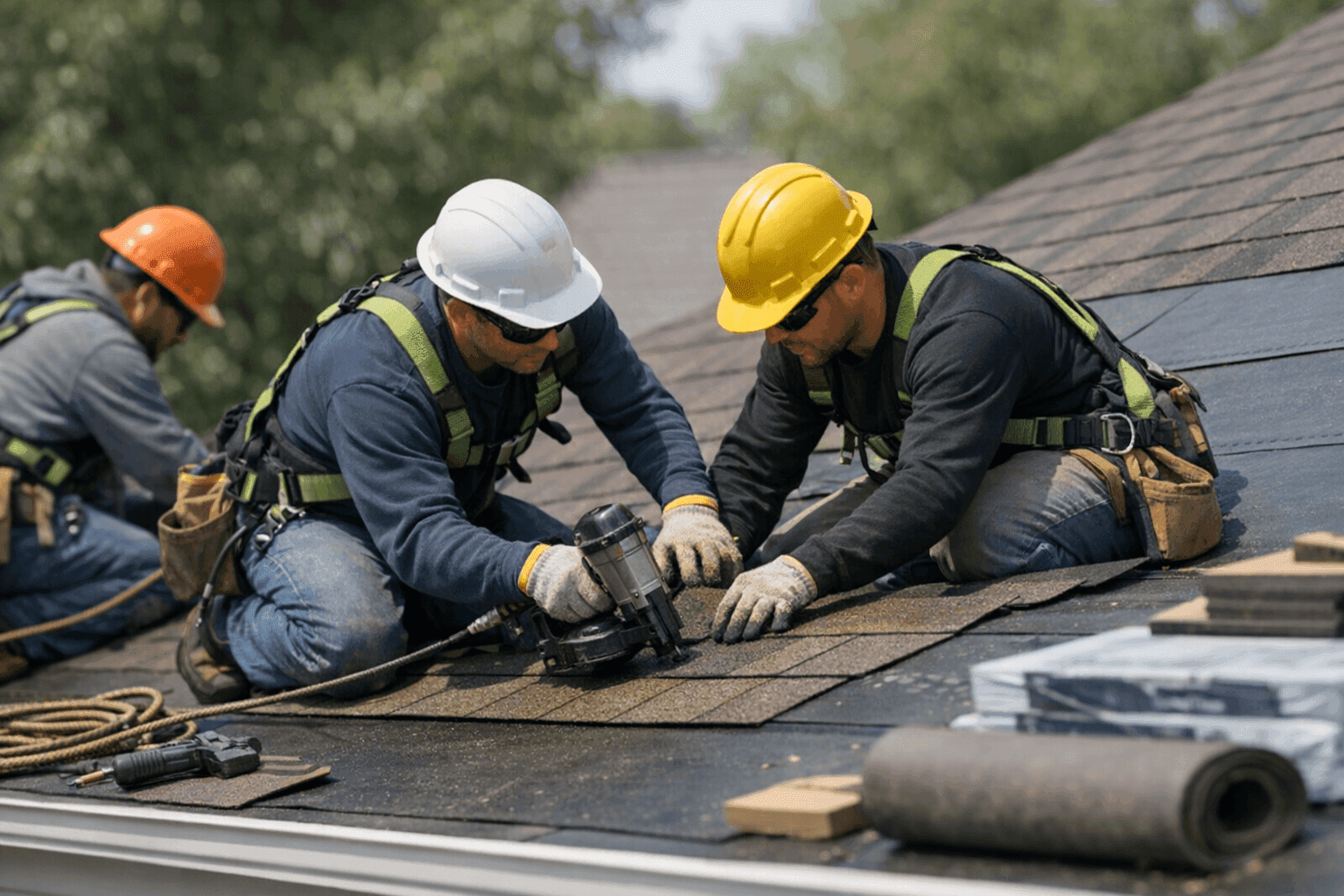
Here’s where the magic happens. Whether it’s shingles, tiles, or metal panels, we install your new roof one section at a time. We use manufacturer-recommended fasteners and patterns to ensure a long-lasting fit.
8. Flashings, Vents, and Skylights
We install new flashing around chimneys, skylights, and valleys. Proper flashing is a roof’s unsung hero—it keeps water where it belongs. If you have skylights, we make sure they’re properly sealed and aligned. (See Skylight Installation for more.)
9. Ventilation & Insulation
A healthy roof needs to breathe. We check and upgrade vents as needed, which helps with energy efficiency and prevents moisture buildup in your attic.
10. Cleanup & Final Inspection
No one likes a messy yard. We sweep, magnet, and haul away every scrap. Then we walk the property with you and inspect the roof one last time. Only when you’re satisfied do we call it done.
Timeline from Prep to Cleanup ⏳
How long does a new roof installation take? Most residential projects last 2–5 days, but several factors can stretch that timeline:
- Weather: Rain or high winds can pause work for safety.
- Size and complexity: Larger homes and complex rooflines take longer.
- Material choice: Tile and metal roofs can take more time to install than shingles.
- Hidden repairs: If we uncover structural issues or rot, expect a few extra days.
We keep you updated at every step. No one likes surprises—unless it’s a sunny day when you expected rain.
What Homeowners Should Prepare For
A new roof installation isn’t just a project for the crew—it affects your daily routine, too. Here’s how to make things smoother:
- Move vehicles: Clear the driveway for dumpsters and material delivery.
- Protect valuables: Remove fragile items from walls and shelves. Vibrations from hammering can shake things loose.
- Kids and pets: Keep them indoors or away from work zones. Safety first.
- Noise: Expect early starts and steady hammering. It’s a symphony of progress, but it can get loud.
- Yard prep: Mow the lawn and trim bushes for easier cleanup. Cover delicate plants or move them if possible.
A little prep goes a long way to keeping your home safe and tidy during the project.
Safety First: Quick Checklist
Roofing is dangerous work. At Overhead Roofing, we follow OSHA’s safety standards and local building codes. Our crew uses fall protection, hard hats, and the right tools for every job. Safety isn’t just for us—it protects your property and everyone around it.
Material Matters: Picking the Right Roof
The right roof does more than keep out the rain. It helps define your home’s character. Here’s a quick rundown:
- Asphalt shingles: Affordable, versatile, and easy to maintain.
- Tile roofing: Durable, fire-resistant, and classic in appearance.
- Metal roofing: Long-lasting, energy-efficient, and modern.
- Flat roofs: Ideal for certain architectures; require special coatings and drainage.
Each has its own look, cost, and maintenance needs. We’ll walk you through the choices so you’re never left guessing.
Weather and Seasonal Factors
Timing matters. Spring and summer are popular for roof work, but autumn’s mild temperatures are also ideal. Winter installs can be tricky—cold affects adhesives and shingle flexibility. If a storm hits, we offer Roof Replacement and emergency repairs year-round.
The Cost Equation: What to Expect
New roof costs depend on:
- Square footage
- Material chosen
- Pitch and complexity
- Underlying repairs
We provide a clear, itemized quote up front. No hidden fees, no unwelcome surprises.
DIY vs. Professional Roofing
It’s tempting to tackle a roof job yourself. But professional roofing isn’t just about putting on shingles. Our crews are trained in proper installation, safety, and building codes. A DIY misstep can void warranties or cause costly leaks down the road. For peace of mind, call the pros.
Common Mistakes to Avoid
- Choosing the cheapest bid: Low prices can mean shortcuts or poor materials.
- Ignoring ventilation: Poor airflow leads to mold and high energy bills.
- Skipping inspections: Hidden damage now means bigger repairs later.
- Overlooking gutters and downspouts: Water needs a clear path off your roof.
Signs Your Roof Needs Replacement
- Missing, curling, or cracked shingles
- Persistent leaks or water stains
- Sagging rooflines
- Light visible in the attic
- Granules in the gutters
If you spot any of these, it’s time to schedule an inspection.
After Installation: Maintenance and Prevention
Your new roof is built to last, but regular upkeep is key. Clean gutters, check flashing, and schedule annual inspections. This keeps small issues from becoming big headaches. Learn more about preventative maintenance from the National Roofing Contractors Association (NRCA) guidelines.
Frequently Asked Questions
How noisy will it be?
There will be hammering, scraping, and the occasional thud. Most jobs run during daylight hours.
Should I stay home?
You can, but consider errands or remote work if noise is a concern.
What if it rains?
We monitor forecasts closely. If needed, we cover exposed areas to keep your home dry.
Will you clean up nails and debris?
Absolutely. We use magnets and sweep thoroughly before leaving.
How do I get started?
Schedule an inspection and consultation. We’ll guide you from there.
Local Roofing Services You Can Rely On
If you’re searching for a dependable roofing company, Overhead Roofing brings experience, quality materials, and clear communication to every project. We handle everything—tile roofing near you, shingle, metal, and more—so your new roof stands strong for years.
Call Overhead Roofing now — or reach us anytime at 855-554-4704 .