How to Spot Roof Leaks and Their Causes
Keeping your home safe and dry begins above your head. Most leaks start small—like a whisper you barely notice—before they turn into a shout. At Overhead Roofing, we know that a timely fix can make all the difference.
A leaky roof isn’t just an inconvenience. Left alone, water finds a way—seeping into ceilings, walls, and even your foundation. Understanding how to spot warning signs early can save money, stress, and your peace of mind.
Signs of a Roof Leak 🚩
Before the drips become a downpour in your living room, there are subtle clues. Catching these early is half the battle.
- Ceiling stains: Brown, yellow, or coppery splotches on ceilings or walls.
- Peeling paint or wallpaper: Especially near the ceiling line or around windows.
- Musty odors: Dampness trapped in insulation or drywall.
- Bubbling plaster: Swollen or warped areas on walls and ceilings.
- Mold or mildew: Unusual growth where walls meet the ceiling.
Small clues often hide in plain sight. Keep your eyes peeled, especially after a storm.
Attic Checks
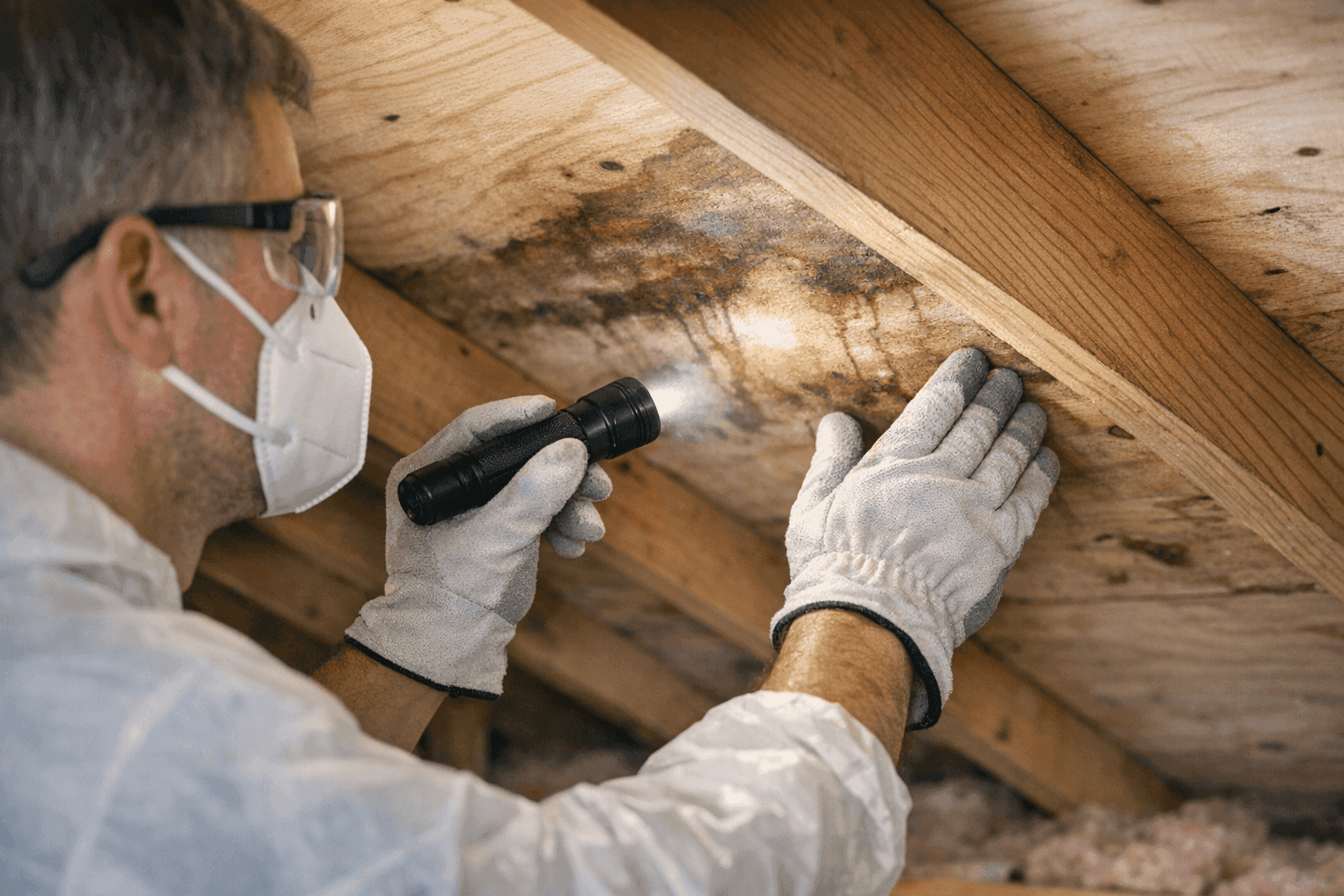
Your attic is the front line in the fight against leaks. Grab a flashlight and take a safe look:
- Look for damp insulation or wet rafters.
- Check for daylight peeking through the roof boards.
- Feel for cool drafts or musty air.
According to the International Association of Certified Home Inspectors, regular attic inspections can spot leaks before they become major repairs.
Ceiling Stains
Not all stains are from leaks, but most leaks leave a calling card. If you notice a new spot, trace its edges. Is it growing after each rainfall? If so, water is finding a path in.
Using a Hose for Testing
If you suspect a leak but can’t find it, try this: On a dry day, have someone inside the attic. From outside, use a garden hose to gently wet sections of the roof, one area at a time. Wait a few minutes, then move to the next spot. Watch for water entry. This method is safe and simple—just don’t climb on a wet roof.
Common Leak Locations
Water is persistent, but it follows patterns. Here’s where leaks most often start:
- Around chimneys: Flashing can pull away or corrode.
- Skylights: Improper seals or cracked glass let water in.
- Roof valleys: Where two roof planes meet is a natural funnel.
- Vents and pipes: Boots and gaskets age, crack, or shift.
- Shingles or tiles: Missing, broken, or slipped out of place.
- Gutter edges: Overflow or ice dams push water under shingles.
If you have a flat roof or metal roofing, ponding water and seam failures are other culprits.
Step-by-Step Leak Identification
Finding the source is like detective work. Here’s how to safely investigate:
- Check inside first. Look for stains, peeling, or dampness.
- Head to the attic. Inspect insulation, rafters, and decking for wet spots.
- Measure from inside to outside. Find the leak location inside, then measure its distance from two exterior walls. Use that to estimate where to look outside.
- Walk the perimeter. From the ground, look for missing or damaged shingles, loose flashing, or clogged gutters.
- Use the hose method. Only if it’s safe and you’re comfortable.
- Document with photos. Take pictures of damage for insurance and repair planning.
Safety first: Never walk on a wet or icy roof. If in doubt, call for help.
What to Do Next
Found a leak? Here’s what to do now:
- Contain water: Place buckets or towels to catch drips.
- Protect belongings: Move furniture or valuables out of the wet area.
- Ventilate: Open windows or use fans to dry damp spots.
- Call a roofing professional: The sooner, the better.
Some fixes are quick; others take time. Either way, prompt attention prevents bigger headaches down the road.
When to Call a Roofer
DIY is tempting, but roof repairs can be risky. If you spot:
- More than one leak
- Sagging ceilings
- Electrical hazards
- Mold or extensive water damage
It’s time for professional leak repair. Overhead Roofing’s team handles everything from inspections to complex repairs, so you don’t have to climb a ladder or risk a fall.
Prevention is Cheaper Than Repair
A stitch in time saves nine—especially with your roof. Preventative maintenance stops leaks before they start. Schedule:
- Annual roof inspections
- Gutter cleaning every fall and spring
- Prompt repair of loose shingles or flashing
Regular care follows guidelines set by the National Roofing Contractors Association and can double the life of your roof.
How Pros Address Leaks
When a roofing company arrives, here’s what you can expect:
- Interior and exterior inspection
- Targeted leak tracing
- Temporary patching if needed
- Detailed repair recommendations
- Transparent timeline for work completion
No guesswork—just a clear plan.
Common Mistakes Homeowners Make
- Ignoring small stains or drafts
- Relying on caulk alone for major leaks
- Walking on steep or wet roofs
- Skipping annual inspections
A little attention now prevents costly damage later.
Seasonal Considerations
Spring thaws and heavy autumn rains are prime times for leaks. After storms, check your attic and ceilings. In winter, watch for ice dams. If heavy snow sits on your roof, clear it safely to prevent seepage.
Costs and Timeline
Repair costs depend on the leak’s cause and extent. Minor flashing fixes might take a few hours. Major replacements (like tile roofing or skylight repair) could stretch into days. Your roofer should outline the timeline and what to expect.
When It’s an Emergency
If water is pouring in or ceilings are at risk of collapse, act fast:
- Evacuate the area.
- Shut off electricity if water is near outlets or fixtures.
- Call for emergency roofing services immediately.
Roof Flashing and Why It Matters
Flashing is the metal barrier protecting roof edges, chimneys, and skylights. Old or damaged flashing is a top leak source. If you’re in need of Roof Flashing Repair, don’t delay—water follows the path of least resistance.
The Role of Inspections
Annual Inspections are like an annual check-up for your roof. Even if you don’t see a leak, pros can spot weak spots, worn shingles, or failing sealants before they break down.
FAQ: Homeowner Leak Questions
Q: Can I patch a roof leak myself?
A: Small caulk jobs are okay for temporary fixes, but most leaks need professional attention.
Q: Will insurance cover roof leaks?
A: Policies vary. Document everything and call your insurer promptly.
Q: How often should I have my roof checked?
A: At least once a year, and after any major storm.
Q: Are certain roofs more leak-prone?
A: Older roofs, flat roofs, and homes with many roof penetrations (chimneys, skylights) are at higher risk.
Final Thoughts
A leaky roof is more than a nuisance—it’s a warning sign. The sooner you act, the safer your home and family will be. If you’re searching for reliable roofing services or need fast leak repair, Overhead Roofing is just a call away.
Call Overhead Roofing now — or reach us anytime at 855-554-4704 .