The Homeowner’s Guide to Roof Leak Detection and Repair
Water stains on your ceiling. A drip in the hallway. That faint musty smell after it rains. Few things unsettle homeowners faster than the signs of a roof leak. The truth? Small leaks can quickly become big, costly problems if ignored.
At Overhead Roofing, we understand the worry and confusion that roof leaks bring. This guide will help you spot warning signs, understand what’s at stake, and know when to call in the pros for leak repair—before things get out of hand.
Common Causes of Roof Leaks
A leaky roof doesn’t just happen out of the blue. Most leaks start with a weak spot—something small, overlooked, or worn out. Here are some of the most common culprits homeowners face:
- Damaged or missing shingles: Wind, hail, and age can crack or dislodge shingles, opening a path for water.
- Clogged gutters: When leaves and debris pile up, water backs up under your roof edge instead of draining away.
- Faulty flashing: The thin metal strips around chimneys, vents, or skylights keep water out. If they rust or lift, leaks follow.
- Aging sealant: Sealants around roof penetrations can break down over time, allowing water to sneak in.
- Poor skylight installation: Even a tiny gap around a skylight frame can become a major source of leaks.
- Cracked vent boots or pipes: These protective covers can split, especially after harsh winters.
- Damaged decking: If the wood beneath your roofing gets wet, it weakens and lets moisture in.
No matter the cause, a leak is a warning sign. Ignoring it can mean mold, insulation damage, or even rotten framing.
How to Detect Leaks (Attic, Ceiling, Exterior) 🕵️
Spotting a leak early is like finding a tiny crack before the dam breaks. Here’s how you can track down trouble before it grows:
Inside Your Attic
- Look for water stains: Dark rings or discoloration on rafters and insulation are classic leak clues.
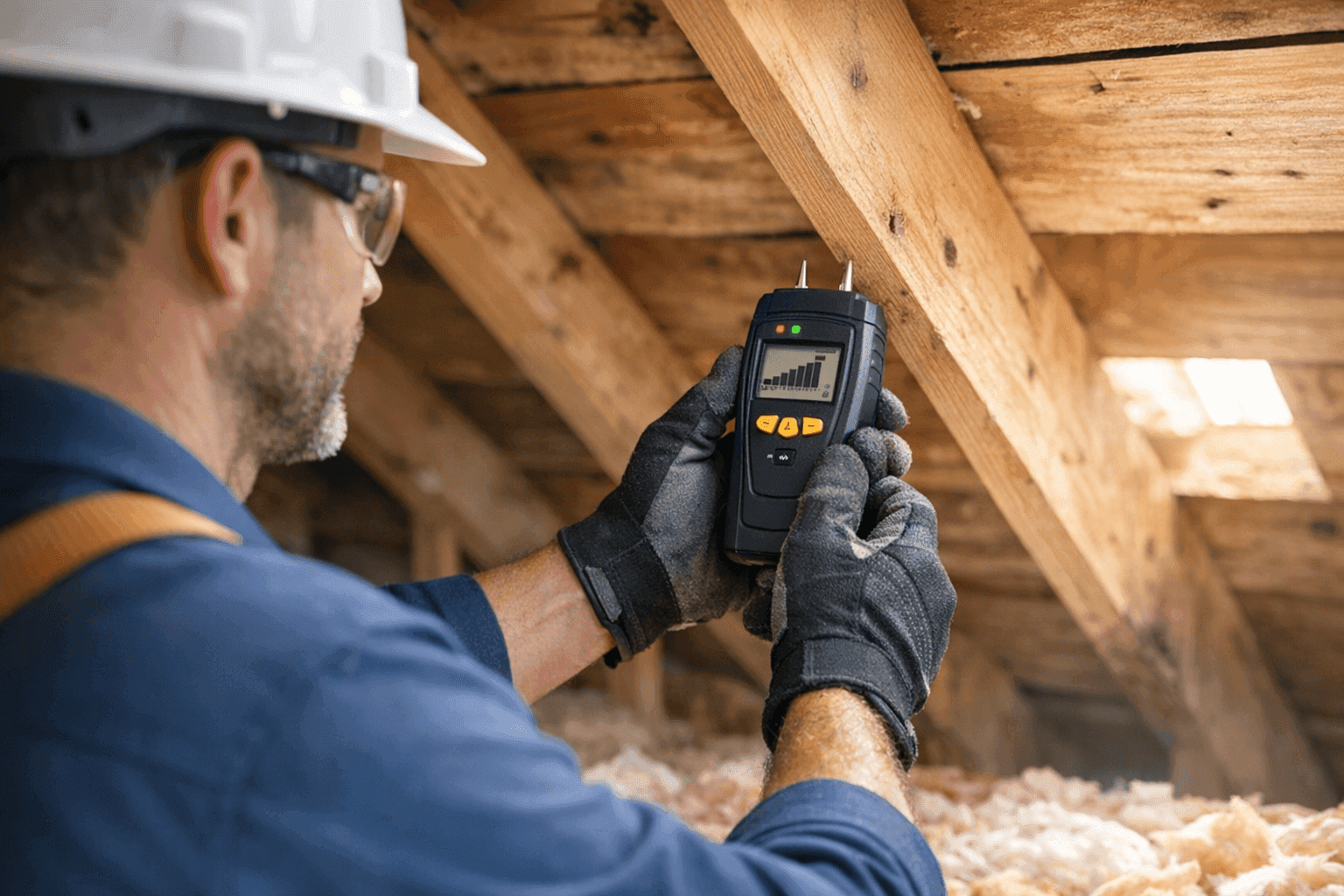
- Check for dampness: Use your hand—or a moisture meter—to feel for wet spots after rain.
- Sniff for musty odors: Persistent damp smells usually signal trapped water.
On Your Ceilings and Walls
- Watch for bubbles or peeling paint: Moisture behind drywall often causes bubbling, peeling, or sagging.
- Inspect for stains: Yellow or brown marks on ceilings are clear signs water is making its way in.
- Feel for softness: Press gently; a soft or spongy spot is a red flag.
Around the Exterior
- Check shingles and flashing: Look for cracked, curled, or missing pieces.
- Examine gutters and downspouts: Overflow or pooling water means trouble is brewing.
- Look for moss or algae: Growth along seams or shingles can mean water is lingering.
A flashlight and a rainy day are your best tools. Take safety seriously—if the roof is steep, wet, or high, stay on the ground and call a professional.
Roof Leak Repair Options
Once you’ve spotted a leak, what’s next? Not all leaks are created equal—some are quick fixes, while others need professional care.
DIY Repairs: The Small Stuff
- Replace a shingle: If you find a single damaged shingle, you might be able to swap it out yourself.
- Seal a tiny gap: Roof sealant can help with minor cracks or holes—temporarily.
- Clear gutters: Sometimes, a simple cleaning solves the problem.
But, just like patching a bike tire, DIY repairs are often only a short-term fix. Water finds its way into the smallest spaces, and a missed spot can lead to bigger headaches.
When to Call Overhead Roofing
- Multiple leaks or stains: More than one trouble spot often means a deeper problem.
- Flashing or skylight issues: These repairs require skill and the right materials.
- Significant water damage: Wet insulation, framing, or mold are signs you need a pro.
- Steep or high roofs: Safety first—never risk a fall.
A professional roofing company like Overhead Roofing will inspect, diagnose, and repair the source—not just the symptom. We use industry-standard materials and methods in line with recommendations from the National Roofing Contractors Association (NRCA) and local building codes.
For more on how we handle leaks, see our Leak Repair and Roof Repair services.
Quick Safety Checklist
Before you step foot in the attic or start poking at your ceiling, pause. Roof leaks can lead to hidden dangers:
- Electrical hazards: Water can drip onto wiring—never touch wet outlets or fixtures.
- Slippery surfaces: Wet decking or insulation is easy to slip on.
- Structural concerns: Sagging ceilings or beams can give way unexpectedly.
If you’re ever unsure, wait for help. No repair is worth risking your safety.
What to Expect When Pros Arrive
Calling in the pros? Here’s what a typical visit from Overhead Roofing looks like:
- Inspection: We start inside and out—attic, ceiling, exterior—using moisture meters and years of experience.
- Diagnosis: Once we find the entry point, we check for related damage (mold, rot, insulation).
- Repair: We address not just the leak, but the root cause—whether it’s shingle replacement, flashing repair, or sealant.
- Cleanup and advice: No debris left behind, and we’ll share tips to help you avoid future leaks.
Timeline & Disruption: How Long Will It Take?
Most single-leak repairs take a few hours. If there’s structural damage or large sections to replace, it could mean a day or two. During repairs, expect some noise, movement of furniture or attic items, and brief water shut-offs if needed for safety.
Our team always aims to minimize disruption—your home is your castle.
Costs & Time Factors
Here’s what influences the cost and duration of leak repairs:
- Severity: A single shingle fix is quick; replacing decking or flashing takes longer.
- Access: Steep or high roofs require extra safety measures.
- Material: Tile Roofing near you, metal, or shingle? Each has its own repair process.
- Weather: Rainy or freezing weather can slow things down.
We always provide a clear estimate before work begins. No surprises.
Roof Leak Emergencies: What Counts as Urgent? ⚠️
Some leaks can’t wait. Call for emergency roofing services if:
- Water is escaping rapidly: Buckets can only do so much.
- Ceiling is bulging or sagging: This could mean a collapse is imminent.
- Electrical systems are wet: This is a fire risk.
- Storm or high-wind damage: Exposed decking means your home is vulnerable.
In these cases, call Overhead Roofing immediately. We respond fast to protect your home from further harm.
Preventing Future Leaks
A little prevention goes a long way. Here’s how to keep your roof in top shape:
- Annual inspections: A pro can spot small issues before they turn into big repairs. Learn more about our Inspections.
- Regular gutter cleaning: Keep water flowing away from your home.
- Prompt repairs: Address loose shingles, flashing, or sealant as soon as you notice them.
- Trim overhanging branches: Falling limbs can puncture roofing or clog gutters.
- Upgrade ventilation: Good airflow prevents condensation and extends roof life.
Routine maintenance is a homeowner’s best defense against leaks.
Seasonal Considerations
Every season brings its own challenges:
- Spring: Melting snow and rain test your roof’s endurance.
- Summer: Heat can dry and crack older shingles or sealants.
- Fall: Leaves clog gutters; storms can rip off shingles.
- Winter: Ice dams and heavy snow add weight and blockages.
Schedule inspections in spring and fall for best results.
Common Mistakes Homeowners Make
It’s easy to underestimate a leak or try a quick fix:
- Ignoring small stains: They almost always get bigger.
- Using the wrong materials: Not all sealants or shingles are created equal.
- Skipping annual checks: Out of sight, out of mind—until water’s running down your wall.
A little vigilance saves a lot of money.
FAQ: Roof Leaks and Repairs
How soon should I fix a leak?
Immediately. Even minor leaks can cause major damage fast.
Can I walk on my roof to inspect it?
We advise against it unless you’re experienced and it’s safe. Roofs can be slippery or structurally unsound.
What’s the best material to prevent leaks?
No one-size-fits-all answer—Tile Roofing near you, metal, or shingles all have strengths. The key is proper installation and maintenance.
Are leaks covered by insurance?
Sometimes, if caused by sudden events (like storms). Check your policy and act fast.
When to Replace Instead of Repair
If your roof is near the end of its lifespan—20 years for asphalt shingles, longer for metal or tile—it may be time for replacement. Multiple leaks, widespread shingle loss, or sagging decking often signal it’s more cost-effective to replace than repair.
The Professional Touch: Why Choose Overhead Roofing
A leak isn’t just an inconvenience. It’s a warning that your home needs care. At Overhead Roofing, we handle everything—from inspections to Leak Repair—using proven methods and materials built for the long haul.
If you’re searching for reliable roofing services, we’ve helped countless homeowners just like you find peace of mind. Learn more about our roofing company in West Fargo.
Final Thoughts: Don’t Wait, Act Now
A roof leak won’t fix itself. The sooner you act, the less you risk. Whether it’s a faint stain or a rushing drip, Overhead Roofing is here to help.
Call Overhead Roofing now — or reach us anytime at 855-554-4704 .