Flat Roofs vs. Pitched Roofs: Which Is Best for Your Home?
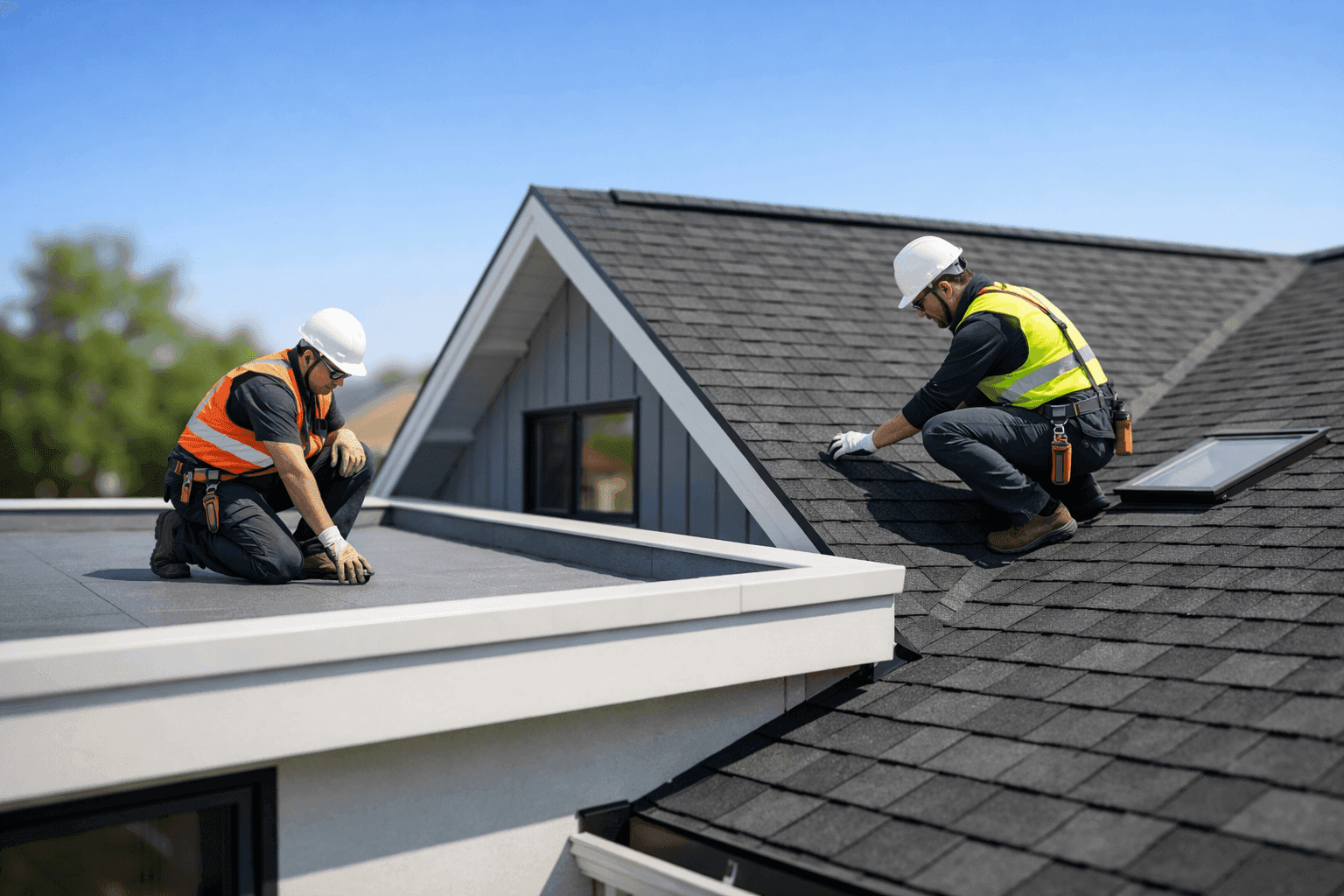
Is your roof looking tired? Maybe it’s time for a change, or you’re building a new home from the ground up. One of the biggest decisions you’ll face is choosing between a flat roof and a pitched roof. It’s not just about style—your choice can shape your home’s energy use, maintenance routine, and even your peace of mind during storms.
At Overhead Roofing, we’ve installed, repaired, and replaced every type of roof you can imagine. We know that the “right” roof isn’t the same for everyone. Let’s break down the real differences—so you don’t have to play guessing games with your investment.
What’s the Difference?
Think of a flat roof like a pancake—broad, simple, and mostly level, but with just enough tilt to let water run off. Pitched roofs are more like tent tops, sloping sharply to shed rain and snow.
- Flat Roofs: Usually have a pitch between 1/4 and 1/2 inch per foot. They look modern and maximize usable space below.
- Pitched Roofs: Slope at a noticeable angle, sometimes steeply. Traditional, familiar, and great at sending water on its way.
Building codes—like those from the International Residential Code (IRC)—dictate minimum slopes for safety and drainage. Always check local guidelines, or let a roofing pro help navigate the red tape.
Pros and Cons of Flat Roofs 🏢
Flat roofs are popular for modern homes and urban builds—but they’re not just about looks.
Advantages
- Extra Usable Space: Think rooftop decks, gardens, or even solar panels. A flat roof can be your own private patio.
- Simple Access: Maintenance is less nerve-wracking. Walking on a flat roof feels more like strolling on a sidewalk.
- Sleek, Modern Appeal: Clean lines. Minimalist vibe.
Drawbacks
- Drainage Demands: Water doesn’t run off as easily. Without the right slope and drains, puddling happens.
- Maintenance: More frequent checks for leaks and ponding are a must. Small issues can get big, fast.
- Shorter Lifespan: Materials like modified bitumen or rubber membranes may not last as long as some pitched-roof options.
Flat roofs work best where heavy snow isn’t a routine guest, and when a modern look is part of your dream. They’re also great for homes with limited height restrictions.
Pros and Cons of Pitched Roofs 🏠
Pitched roofs are the classic choice. You see them in every neighborhood, crowning homes with character and practicality.
Advantages
- Excellent Drainage: Water and snow slide off with gravity’s help, keeping leaks at bay.
- Longer Lifespan: Materials like asphalt shingles, tile, or metal tend to go the distance.
- Attic Space: That slope hides valuable storage—or even a bonus room for your needs.
Drawbacks
- Harder Access: Repairs and cleaning are trickier. Working on a steep roof can be risky.
- More Materials: Extra surface area means more shingles (and often, more cost).
- Traditional Look: Not for every style or homeowner. Sometimes, it clashes with modern architecture.
For areas with lots of rain or snow, pitched roofs are a time-tested choice. They’re the “umbrella” your house wears year-round.
Choosing Based on Climate, Budget, and Style
Your roof’s shape should fit your life—like a well-chosen hat. Here’s how to think it through.
Climate
- Cold or Wet Regions: Pitched roofs are a safe bet. They keep snow and water moving, which prevents leaks and ice dams.
- Dry or Mild Areas: Flat roofs shine here. Less rain means fewer drainage headaches.
- Wind Exposure: Pitched roofs can catch more wind but are designed to resist uplift when built to code. Flat roofs, if poorly anchored, can suffer during storms.
Budget
- Flat Roofs: Usually less expensive to install (less material, less labor), but may cost more to maintain over time.
- Pitched Roofs: Higher upfront costs, but often lower repair frequency.
Style
- Modern Homes: Flat roofs pair well with clean lines and big windows.
- Traditional or Historic Homes: Pitched roofs keep the classic charm alive.
Materials: What’s Under the Surface?
- Flat Roofs: Often use materials like EPDM rubber, TPO, modified bitumen, or built-up roofing. Each has its own pros and cons for durability and cost.
- Pitched Roofs: Asphalt shingles, clay or concrete tile, metal panels, wood shakes—options abound. Your choice will affect longevity and curb appeal.
Always ask about fire ratings and energy efficiency, especially with eco-friendly options now available for both roof types.
Maintenance: What’s Involved?
Flat Roofs
- Check drains and scuppers regularly.
- Watch for ponding water after rain.
- Inspect seams and flashing for cracks or gaps.
- Schedule an annual professional inspection.
Pitched Roofs
- Clear gutters and downspouts at least twice a year.
- Look for missing or damaged shingles.
- Trim overhanging branches.
- Inspect attic for signs of leaks or moisture.
For both, a little attention goes a long way. Preventative maintenance beats emergency repairs every time.
Costs & Time Factors
- Installation: Flat roofs are typically quicker to install. Less slope means less complex framing.
- Repairs: Flat roofs may need more frequent patching and sealant work. Pitched roofs can mean more material cost for large repairs.
- Replacement: Most pitched roof materials last 20–50 years; flat roof materials may need replacing after 10–25.
No matter the style, always factor in the total lifespan and maintenance needs—not just the initial price tag.
Timeline & Disruption
- Flat Roofs: Installations are usually fast and cause minimal disruption.
- Pitched Roofs: More complex, so expect a longer timeline and more noise.
Ask your contractor for an honest estimate. Weather can delay any roofing project, so plan ahead if possible.
Common Mistakes to Avoid
- Ignoring Code Requirements: Don’t guess at pitch or drainage needs—local building codes exist for good reason.
- DIY Overreach: Flat roofs might look simple, but mistakes can lead to leaks and costly repairs. Pitched roofs are risky and require safety equipment.
- Skipping Maintenance: Out of sight, out of mind? Not with roofs. Schedule inspections, especially after storms.
When It’s an Emergency
Flooding, leaks, or storm damage? Both roof types can be vulnerable, especially if neglected.
- Flat Roofs: Pooled water can break through fast. Temporary patches may buy time, but call for professional repair.
- Pitched Roofs: Missing shingles or flashing can let water in. Cover exposed areas and get help—don’t wait.
If you’re ever unsure, reach out. Overhead Roofing offers emergency services and advice to keep your home safe.
Prevention & Maintenance Tips
- Schedule regular inspections—even if nothing looks wrong.
- Clean gutters and drains seasonally.
- Trim trees and watch for debris.
- Invest in quality flashing and sealants to prevent leaks.
- If you notice signs of trouble—like stains, bulges, or musty smells—call a roofing specialist.
Signs of Trouble
- Flat Roofs: Bubbling surfaces, standing water, soft spots underfoot.
- Pitched Roofs: Curling shingles, granules in gutters, daylight in the attic.
Catching problems early can save thousands. Don’t ignore the small stuff.
DIY vs. Call a Pro
Some jobs—like clearing leaves—are safe for homeowners. But most roofing work is best left to professionals. Falls are a real risk, especially on pitched roofs.
If you’re dealing with leaks, structural damage, or anything beyond basic cleaning, call in a qualified roofing contractor.
Real-World Scenario: Making the Choice
Picture this: Your neighbor goes for a flat roof, dreaming of a rooftop garden. Three blocks down, a family opts for a classic pitched roof to handle Wisconsin’s snowy winters. Both made the right call—for their needs.
There’s no one-size-fits-all answer. The “best” roof is the one that matches your climate, your budget, and your style. For more on local requirements, see resources like the National Roofing Contractors Association (NRCA) and local building departments.
For those searching for roofing services in Sheboygan, Overhead Roofing is always ready to help you weigh your options.
Ready for a New Roof?
Choosing between flat and pitched roofs isn’t about right or wrong—it’s about what works best for your home and your family. Whether you’re planning a new build, a major upgrade, or just need an honest inspection, Overhead Roofing is here to help.
Explore our Flat Roofs and New Roof Installation services for more details on materials and process.
Call Overhead Roofing now — or reach us anytime at 855-554-4704 .