How to Handle Emergency Roof Damage: Step-by-Step Homeowner Guide
When a roof emergency strikes, you feel it in your gut. Wind howls, water drips, or a tree limb thuds overhead. Suddenly, your safe haven is under attack from the sky. It’s stressful—but with the right steps, you can protect your family, your belongings, and your peace of mind.
At Overhead Roofing, we’ve helped countless homeowners through the chaos of unexpected roof damage. This guide arms you with practical steps—so you’re ready when the unexpected knocks.
Types of Roof Emergencies 🌀
Roof emergencies don’t play favorites. They can hit anyone, anytime. Here are the most common culprits:
- Storm Damage: High winds, hail, or heavy rain can rip off shingles and damage flashing. Sometimes, entire sections of the roof go missing.
- Falling Trees or Debris: One unlucky tree limb can punch a hole straight through your roof.
- Fire Damage: Even small attic fires can weaken roof structures and leave gaps.
- Major Leaks: Water pouring in from above is never normal. Large leaks often signal major trouble—fast.
If you spot daylight through your ceiling or water pouring down your walls, it counts as a roofing emergency.
Immediate Safety Steps
First things first: keep your family safe. No roof is worth a personal injury. Here’s your quick checklist:
- Stay Out of Danger Zones: If water is pouring in, avoid rooms with ceiling sagging or visible leaks. If you smell gas or see electrical sparks, leave the house and call emergency services.
- Turn Off Electricity: Water and electricity don’t mix. If safe, switch off power to affected rooms.
- Contain Water: Place buckets, towels, or any container under leaks to catch dripping water.
- Evacuate if Necessary: If you suspect structural damage, such as a collapsed roof or fire risk, get everyone outside immediately.
These steps may seem simple, but they make a big difference when every second counts.
Temporary Damage Control 🛠️
Once everyone’s safe, you can try quick fixes—only if it’s safe to do so. Think of it as putting a bandage on a wound until the doctor arrives.
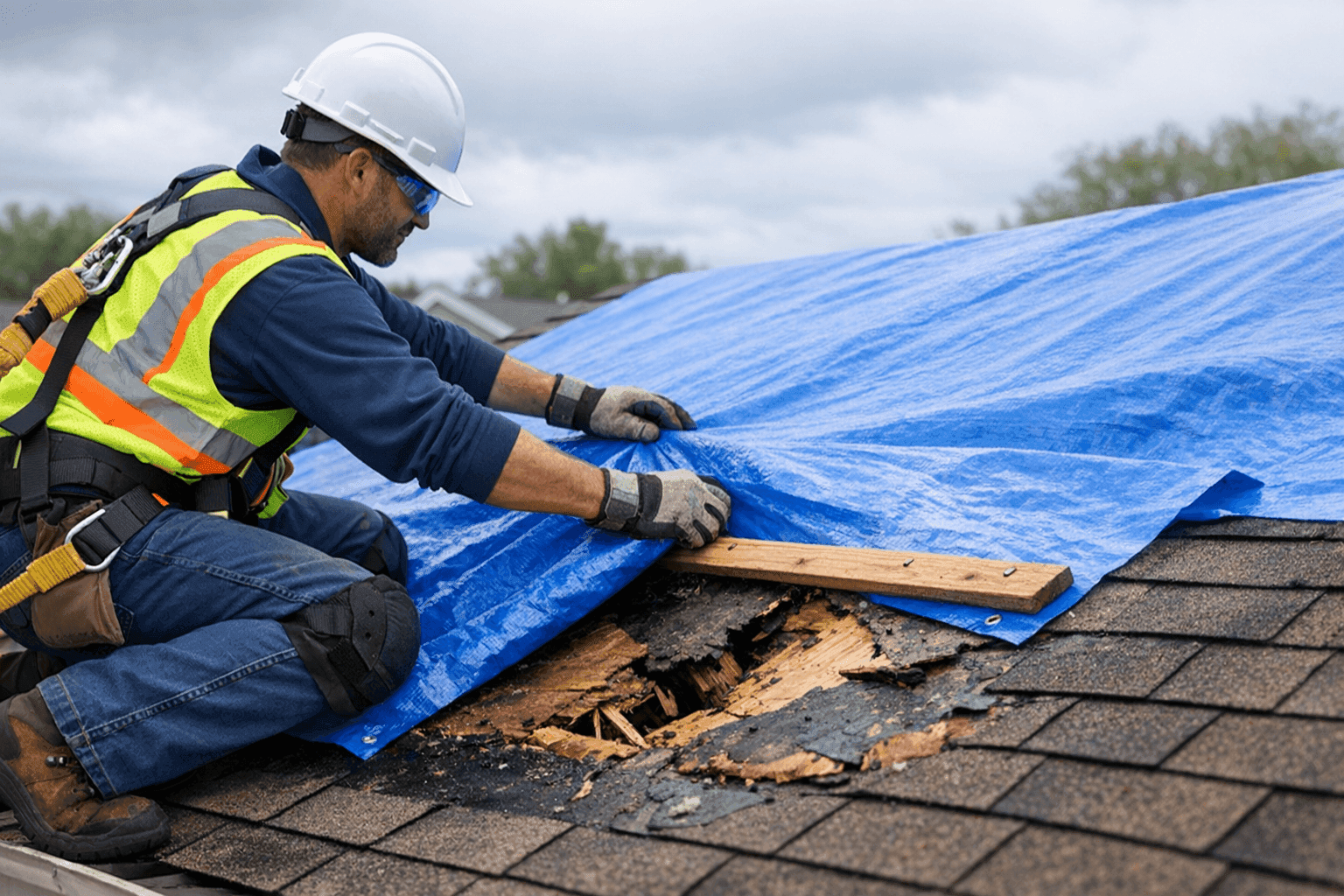
- Tarp the Area: If safe and weather allows, cover damaged sections with a tarp. Secure it with heavy objects (not nails) to avoid further harm.
- Move Valuables: Pick up electronics, furniture, and important documents from water-prone areas.
- Mop Up Excess Water: Dry up puddles to prevent slips and further damage to floors.
- Document Everything: Take photos and jot down details. This helps with insurance claims later.
Never climb onto a wet or unstable roof. If you’re unsure, wait for the pros.
When and How to Contact Pros
If your roof is damaged, time is not your friend. Get in touch with professionals as soon as you can. Here’s what to look for:
- Visible Holes or Missing Shingles: These need attention now—not next week.
- Major Leaks in Living Spaces: If water is coming through the ceiling, don’t wait.
- Sagging Ceilings or Walls: This could mean structural danger.
Contact a licensed roofing company offering emergency-services. Let them know if water is actively entering your home, or if you need urgent tarping. Share photos if possible—it helps them prepare.
DIY vs. Call a Pro
Sometimes, it’s tempting to fix things yourself. But roofs are high, steep, and slippery—especially in bad weather. Here’s when to DIY, and when to call for backup:
- Safe DIY: Placing buckets, moving items, tarping a ground-level area with no storm risk.
- Professional Only: Anything involving heights, power tools, electrical hazards, or structural repairs.
Remember: A quick patch is no substitute for a full inspection. Pros check for hidden issues, making sure you’re safe long-term.
What Pros Do on Arrival 🧰
Curious what happens when the Overhead Roofing team arrives? Here’s what to expect:
- Safety Assessment: We check for structural hazards before doing anything else.
- Temporary Repairs: Tarping, sealing, or boarding up holes to stop water intrusion.
- Damage Evaluation: We look for hidden problems—like soaked insulation or damaged supports.
- Cleanup: Removing debris, standing water, and making the site safer.
- Repair Plan: We’ll explain the next steps, costs, and timeline.
We follow OSHA and local building codes to keep your home—and our crew—out of harm’s way.
Prevention & Maintenance
The best emergency is the one you never face. Here’s how to lower your risk:
- Annual Inspections: Schedule a professional roof check at least once a year.
- Clean Gutters and Downspouts: Clogs lead to water backup and leaks.
- Trim Overhanging Branches: Falling limbs are a leading cause of roof punctures.
- Check After Storms: High winds and hail can cause problems you might not see from the ground.
Consider preventative maintenance and roof repair to catch small issues before they turn into emergencies.
Costs and Time Factors
Emergency roofing isn’t like fixing a squeaky door. Urgent repairs may cost more due to quick response, after-hours work, or materials. Here’s what affects price:
- Extent of Damage: A small leak is cheaper than a structural collapse.
- Materials Needed: Tile, metal, or shingle repairs all have different price tags.
- Weather and Access: Stormy conditions or tough-to-reach spots take more time.
Quality repairs take time. Most emergency patch jobs happen fast, but full restoration may take days—especially after major storms.
When It’s Truly an Emergency
Not every drip is a disaster, but some signs mean you can’t wait:
- Ceiling Collapse: If parts of your ceiling sag or break.
- Major Leaks During Rain: Water entering at multiple points.
- Fire or Smoke Damage: Any sign of fire in the attic or roof.
- Storm Debris: Trees, branches, or flying objects embedded in your roof.
If you notice any of these, don’t delay—reach out to the professionals immediately.
Seasonal Considerations 🌧️
Roofing emergencies can strike in any season, but some are more common at certain times:
- Spring/Summer: Severe storms, hail, and wind.
- Fall: Clogged gutters and downspouts after leaf fall.
- Winter: Ice dams, heavy snow, and freeze-thaw cycles can split shingles and cause leaks.
Prepare ahead of time—schedule inspections and clear gutters before the weather turns.
Signs of Trouble Before Disaster
Many emergencies give a warning. Look for:
- Missing, Cracked, or Curling Shingles
- Granules in Gutters: Signs your shingles are wearing out.
- Rusty or Loose Flashing: Especially around chimneys, vents, and skylights.
- Stains on Ceilings or Walls: Even small spots can mean a slow leak above.
If you spot these, get them checked out before they become emergencies. Our leak repair service can help with hidden water issues.
Common Mistakes Homeowners Make
It’s easy to panic. Here are pitfalls to dodge:
- Climbing on a Wet Roof: Slippery surfaces and heights are a bad mix.
- Ignoring “Small” Leaks: Even slow drips can rot wood and grow mold.
- Delaying Repairs: Waiting can turn a quick fix into a major expense.
- Not Checking Gutters: Overflowing gutters cause more roof leaks than most realize.
Stay calm, act quickly, and call the pros when needed.
Timeline & Disruption
Wondering how long repairs take? Here’s a rough outline:
- Emergency Response: Same day, often within hours for urgent tarping or leak control.
- Inspection & Estimate: Within 24–48 hours, depending on weather and demand.
- Full Repairs: From a few hours for minor fixes, to several days for major restoration.
Good news: Most emergency work is quick and focused. Full roof replacement or structural repairs take longer but keep your home secure for years to come.
Materials & Equipment for Temporary Fixes
You don’t need a hardware store in your garage. A few basics can help:
- Tarps and Heavy Plastic Sheeting
- Buckets and Towels
- Duct Tape
- Flashlight (with extra batteries)
- Sturdy Ladder (for ground-level observation only!)
Save the complicated repairs for licensed roofing specialists.
FAQ: Homeowners’ Most Urgent Questions
Q: Will insurance cover emergency roof repairs?
A: Often yes, especially for sudden, accidental damage (like storms or fire). Document everything and contact your insurer promptly.
Q: How soon should I call for help?
A: Immediately, if you see major leaks, holes, or structural risk. The faster you act, the less damage you’ll see.
Q: Can I stay in my home during repairs?
A: Usually, yes—unless there’s risk of collapse, fire, or toxic mold.
Q: What if I need help finding “Tile Roofing near you”?
A: Choose a local, licensed, and insured company. Look for clear credentials and local references.
Trust Your Gut—And the Pros
Roofing emergencies are stressful, but you don’t have to face them alone. When things go wrong, a calm, step-by-step plan can be the difference between a temporary setback and a long-term headache.
If you’re looking for a reliable roofing company after a storm or leak, Overhead Roofing is here for you. Explore more about our roofing services in Mooresville if you’re nearby.
Call Overhead Roofing now — or reach us anytime at 855-554-4704 .