Eco-Friendly Roofing Options for Modern Homes
Rising energy costs. Wild weather. And a world where small changes at home ripple out to shape our future. It’s no wonder more homeowners are looking up—and asking: “How eco-friendly is my roof?”
At Overhead Roofing, we’ve watched the shift. Tile Roofing near you isn’t just about style or shelter anymore. It’s about making choices that are smarter, cleaner, and better for the planet—without sacrificing a single ounce of comfort. If you’re curious what that means for your home, you’re in the right place.
What Makes a Roof Eco-Friendly?
A roof isn’t just a cap on your house. It’s the first line of defense against the elements, but it also speaks volumes about your home’s environmental footprint. So what transforms a basic roof into an eco-friendly roof?
- Material: Some materials, like metal or recycled shingles, last longer and require less replacement.
- Reflectivity: Cool roofs bounce sunlight away, keeping your attic—and bills—cooler.
- Insulation: A well-insulated roof stops precious heat and cool air from leaking out.
- Water Management: Thoughtful gutter and downspout design reduces runoff and protects the environment.
Think of your roof as a shield and a sponge. The right choices help it bounce off heat, soak up rain responsibly, and last for decades with minimal waste. That’s eco-friendly roofing in a nutshell. 🌱
Top Sustainable Roofing Materials
Not all roofs are created equal. Here’s what stands out when durability, recyclability, and performance matter most.
Cool Roofs: Sun-Reflectors for Your Home
Cool roofs are like sunglasses for your house. They reflect more sunlight and absorb less heat than standard roofing. According to the U.S. Department of Energy, a cool roof can lower surface temperatures by up to 50°F (that’s a lot less air-conditioning).
- Best for: Hot climates or anyone looking to cut cooling costs.
- Options: Reflective shingles, white TPO membranes, special coatings.
Metal Roofing: Built to Last
Metal roofing isn’t just strong—it’s recyclable, energy-efficient, and gorgeous on modern homes. It often contains recycled content and is itself fully recyclable at the end of its lifespan.
- Benefits: Long life (40–70 years), minimal maintenance, lightweight.
- Styles: Standing seam, corrugated, and even metal tiles.
- Bonus: Pairs seamlessly with solar panels.
Explore more about metal roofing benefits.
Green Roofs: Nature on Your Home
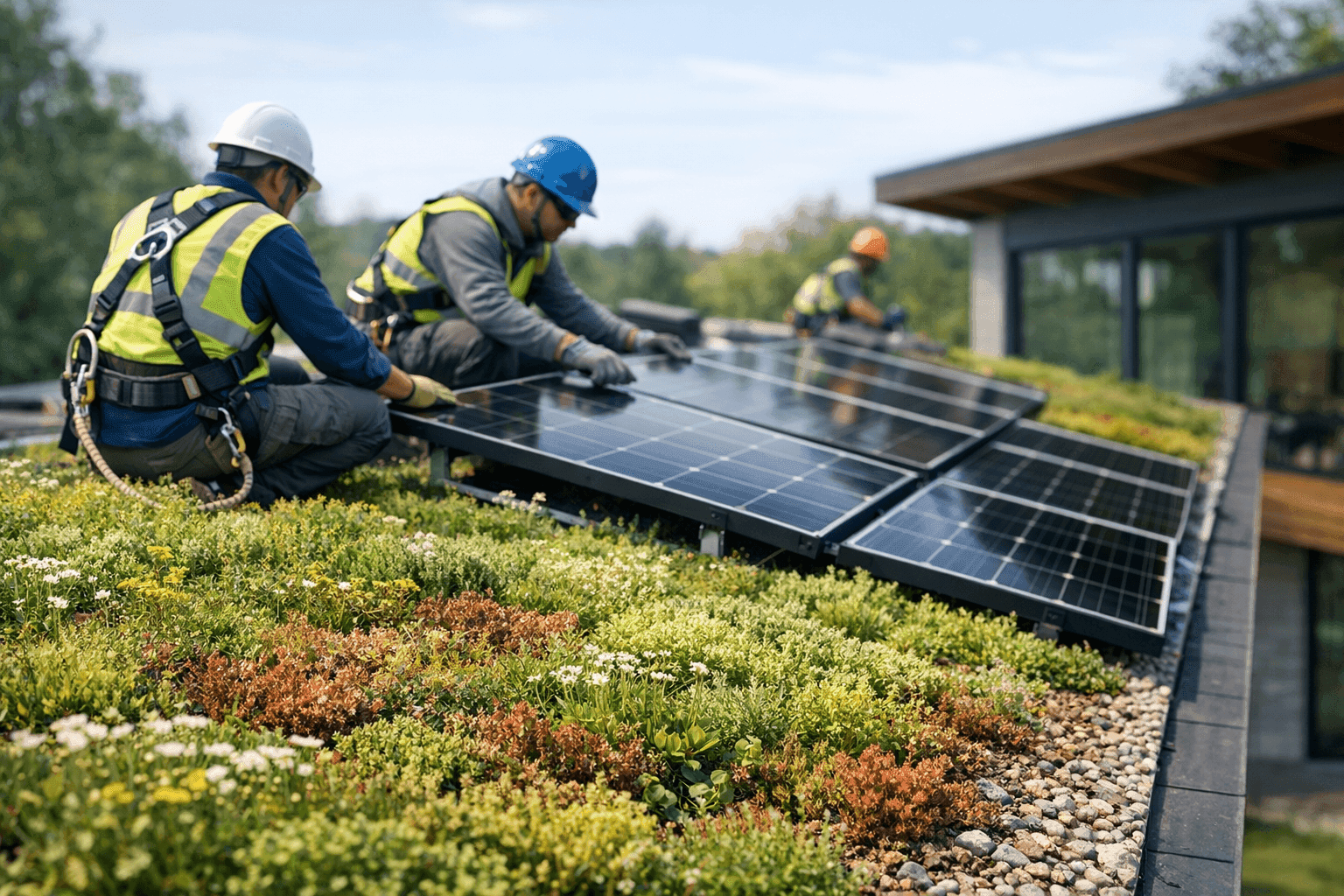
Imagine a living garden sprouting above your living room. Green roofs use layers of soil and plants to insulate your home, absorb rainwater, and support pollinators.
- Best for: Flat or low-slope roofs.
- Consider: Structural reinforcement may be required.
- Extra: Provides habitat for birds and insects.
Recycled Shingles: Second Life, First-Rate Performance
Recycled shingles use rubber, plastic, or wood fiber, keeping waste out of landfills. Some mimic classic slate or wood shake—without the environmental baggage.
- Lifespan: 20–50 years.
- Look: Surprisingly authentic.
Clay and Concrete Tiles: Durable and Timeless
Clay and concrete tiles are old-school but sustainable. They’re made from natural materials, last for decades, and are fully recyclable.
- Downside: Heavier than asphalt, so check your home’s structure.
Energy Savings and Environmental Impact
Eco-friendly roofing isn’t just about “feeling green.” It’s about real energy savings, lower bills, and a smaller carbon footprint.
How Green Roofs Save Energy
Insulation is key. A cool roof or green roof can reduce your cooling needs by up to 10–15%, according to the EPA. That’s less electricity, fewer emissions, and more money in your pocket.
- Reflective roofs: Cut cooling costs in summer.
- Insulated roofs: Trap winter warmth, reducing heating bills.
- Metal roofs: Reflect heat and often integrate with solar panels.
Environmental Benefits That Add Up
- Reduced urban heat islands: Lighter roofs help cool whole neighborhoods.
- Stormwater management: Green roofs and smart gutters reduce runoff and filter pollutants.
- Longer lifespan: Less frequent replacement means less waste.
Upgrading Existing Roofs for Sustainability
You don’t always need a full replacement to go green. Sometimes, smart upgrades can make a world of difference.
Add a Reflective Coating
A simple, professional-grade coating can turn a standard roof into a cool roof. This lowers attic temps and energy bills with minimal disruption.
Boost Insulation and Ventilation
Poor insulation is like leaving a window open year-round. Upgrading your attic or roof insulation keeps temperatures stable. Pair it with proper ventilation & insulation for maximum impact.
Install Efficient Gutters and Downspouts
Directing rainwater away from foundations protects your home and environment. Choose seamless gutters and properly sized downspouts for best results.
Consider Skylights or Solar Tubes
Modern skylights and solar tubes bring in natural light, reducing your need for electric lighting during the day. Look for Energy Star-certified options for the best performance.
Common Myths About Eco-Friendly Roofing
Let’s clear the air. You don’t have to live in a treehouse or spend a fortune to be sustainable. Here are a few myths we hear:
- Myth: “Eco-friendly roofs are too expensive.”
Reality: Many options pay for themselves in energy savings over time. - Myth: “They look weird.”
Reality: Today’s green roofs, metal, and recycled shingles come in a huge range of styles. - Myth: “They don’t last.”
Reality: Metal and tile roofs often outlast standard asphalt by decades.
Quick Safety Checklist for Green Roofing Projects
Safety comes first—always. Here’s what to consider before starting any roofing upgrade:
- Check local codes: Some eco-friendly materials require permits or inspections. Consult the International Building Code (IBC) or your local authority.
- Assess your roof’s structure: Not every home can support a heavy green roof or tile without reinforcement.
- Professional installation: For anything beyond basic cleaning or gutter work, call a licensed roofer.
DIY vs. Call a Pro: When to Get Help
Some eco-upgrades are weekend projects. Others need a pro’s touch.
- DIY-friendly: Gutter cleaning, basic patching, installing solar tubes (with guidance).
- Pro-required: Full roof replacement, metal roofing, structural reinforcement, green roof installation.
Remember: A misstep on the roof is more than an inconvenience—it’s a safety risk.
What Roofers Do On Arrival
When you call Overhead Roofing, here’s what you can expect:
- Inspection: We’ll assess your current roof’s condition, insulation, and ventilation.
- Recommendations: Honest, practical advice based on your home and budget.
- Project planning: Clear timelines, safe practices, and code compliance.
- Cleanup: Because an eco-friendly project isn’t green if it leaves a mess.
Prevention & Maintenance: Keeping Your Green Roof Green
Eco-friendly roofs need TLC. Here’s how to keep them performing:
- Annual inspections: Spot leaks, damage, or insulation gaps before they grow.
- Regular cleaning: Remove debris from gutters and roof surfaces.
- Re-coating: Reflective roofs need refreshers every few years.
- Monitor drainage: Ensure downspouts are clear to prevent water damage.
Costs & Time Factors: What to Budget
Prices run the gamut—just like cars or kitchens. Here’s how to think about it:
- Upfront cost: Metal and green roofs may cost more to install, but last longer and save energy.
- Long-term savings: Factor in lower energy bills and fewer replacements.
- Time: Many upgrades (like cool roof coatings) are quick; full replacements take longer.
It’s wise to get a detailed quote before starting. Overhead Roofing can help you weigh your options.
When It’s an Emergency
Storms don’t schedule appointments. If a tree branch smashes your eco-roofing, call emergency services right away. Water intrusion, sagging, or major leaks demand urgent action—no matter how green your roof is.
Seasonal Considerations for Sustainable Roofs
- Spring: Clean gutters, check for winter damage.
- Summer: Inspect reflective surfaces; watch for overheating.
- Fall: Clear leaves, inspect for leaks.
- Winter: Ensure proper insulation and ventilation to avoid ice dams.
Common Mistakes—and How to Avoid Them
- Skipping permits. Always check local requirements before major upgrades.
- Overloading the structure. Don’t install heavy tiles or a green roof without a structural check.
- Neglecting maintenance. Even the greenest roof fails if it’s ignored.
Signs Your Roof Needs an Eco-Friendly Upgrade
- High energy bills that don’t budge, no matter what you try.
- Hot or cold spots in your attic rooms.
- Frequent leaks or visible wear.
- You want a home that matches your values.
If any of these ring true, it might be time to explore Eco-Friendly Options for your next roofing project.
Timeline & Disruption: What to Expect
Most eco-roofing upgrades are faster than you’d think. Coating a roof or upgrading insulation can be done in a day or two. Full replacements or green roof installations take longer, but a professional team minimizes disruption. We keep your daily life in mind from start to finish.
FAQ: Eco-Friendly Roofing
Q: Do eco-friendly roofs work in all climates?
A: Yes. There’s a sustainable option for every region—from reflective roofs in hot places to insulated tiles in cold ones.
Q: Will it raise my home’s value?
A: According to the National Association of Realtors, green upgrades—especially energy-efficient roofs—often boost resale value.
Q: Can I retrofit my current roof?
A: In many cases, yes. Reflective coatings, insulation boosts, and upgraded gutters are all possible.
Q: Is maintenance harder?
A: Not usually. Green or metal roofs need regular checks—just like any roof.
Practical Tips for Homeowners
- Ask about recycled content when choosing roofing materials.
- Look for Energy Star or similar certifications.
- Prioritize professional installation for complex projects.
- Schedule annual maintenance—prevention saves money.
Ready to Raise the Roof—Responsibly?
Today’s eco-friendly roofing isn’t out of reach. It’s smart, stylish, and built for the real world. If you’re ready for a home that looks good and feels even better, Overhead Roofing is here to help.
Call Overhead Roofing now — or reach us anytime at 855-554-4704 .